
Washington is determined to raise the global cost of doing business with Cuba. A new executive order by the Trump administration no longer just targets entities linked to the Cuban government or U.S.-based sanctions violators. The order now threatens secondary sanctions on nearly any foreign bank, investor, hotel chain, mining company, or financial operator found to be helping the Cuban government, as determined by the U.S. Secretary of State.
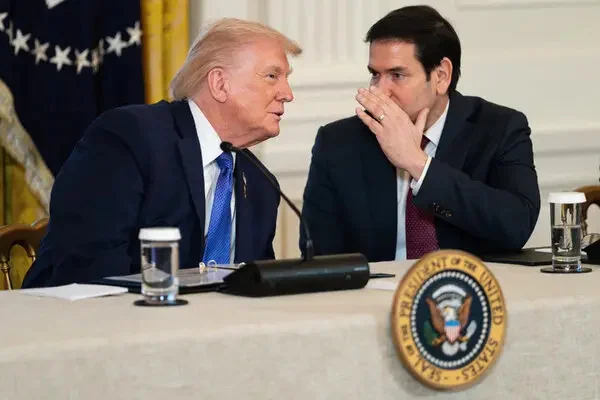
The escalation follows months of bilateral talks that appear to have stalled and coincides with increasingly bellicose rhetoric from President Trump, who claimed he would take Cuba “almost immediately” and Secretary of State Marco Rubio, who increasingly portrays the Cuban government as incompetent and a growing national security concern for the United States.
Cuban Ambassador to the U.N. Ernesto Soberón Guzmán pushed back on suggestions that the communist regime could cave under mounting U.S. pressure. “If someone thinks that words like ‘give up, surrender, or collapse’ are in the Cuban dictionary, in the people’s dictionary, that person, those people, are sorely mistaken,” Guzmán told Fox News.
Meanwhile, the Cuban government is opening slim new channels to attract capital, including a new migration category for diaspora investors. The modest reform in the face of Cuba’s deep crisis reinforces the core contradiction in Havana’s model: how to attract desperately-needed foreign investment and remittances while maintaining tight political and economic control over who can participate and under what terms. At the same time, stricter immigration policies and skyrocketing deportations have radically shifted how Cuban migrants are treated in the United States.
Lastly, a pioneering survey released last week dealt another sharp blow to the Cuban government’s legitimacy. With more than 42,000 responses from Cubans inside and outside the island, it found overwhelming rejection of the current political model, broad support for market reforms, and relatively limited concern about U.S. sanctions compared with issues such as lack of freedoms, government inefficiency, and political stagnation. As Cuban historian Ada Ferrer implores Cuban President Miguel Diaz-Canel in an op-ed this week for the New York Times: “It is time at the very least for a true national dialogue.”
We cover all this and more in this week’s newsletter.